
Feedback
AI Ad Video Example
Loading...
MiniMax H3 prompt
Compose a MiniMax H3 prompt like a director: time-stamped actions, precise lens moves, and rich sonic detail that result in 2K footage with built-in stereo audio.
All Tools
Discover our comprehensive AI-powered animation toolkit
MiniMax H3
MiniMax H3 AI Video Generator
Seedance 2.5
The Future of AI Video Is Here.
Seedance 2.0
The Future of AI Video Is Here.

Veo3.1
Create Stunning Videos with Veo3.1
Grok Video Generator
Create Videos from Text or Images with AI
MiniMax H3 video generator
MiniMax H3 AI Video Generator
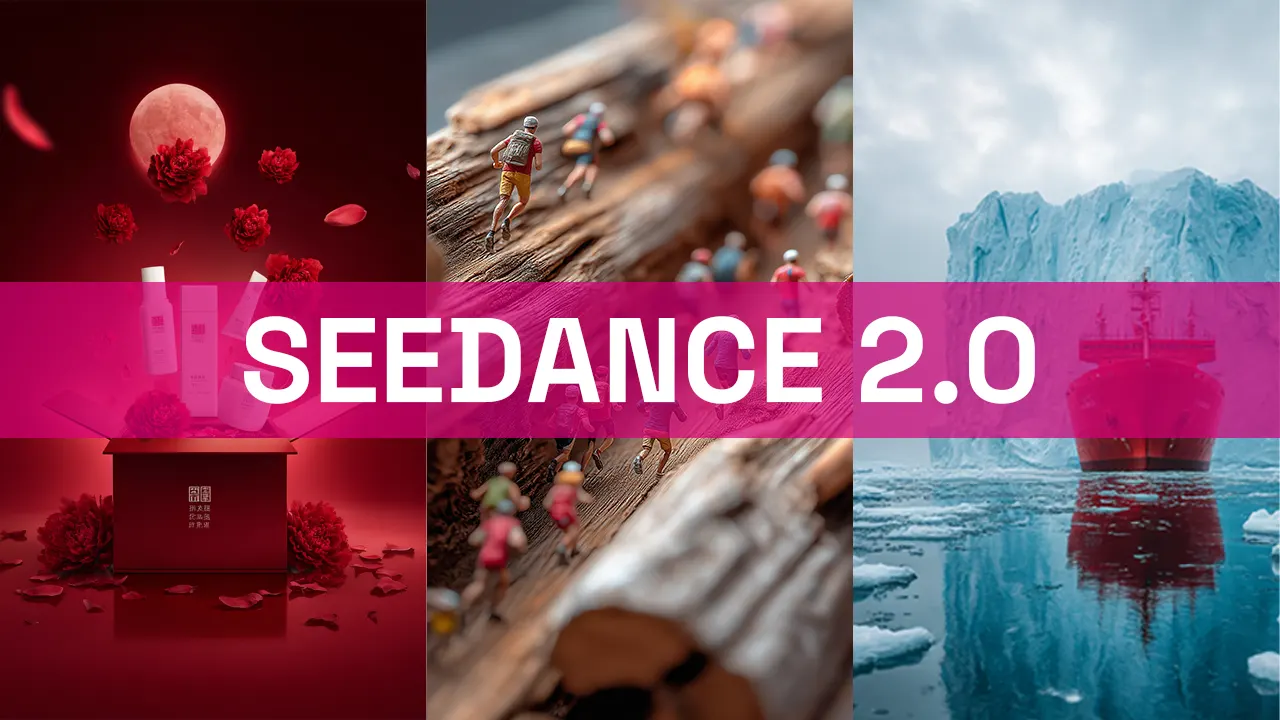
Seedance 2.0
The Future of AI Video Is Here.
Sora2 AI
Advanced AI Video Generator for High-Quality Videos
Mastering the MiniMax H3 Prompt Unlocks Full Creative Control
The MiniMax H3 prompt framework is your gateway to an open-weight multimodal video model that produces 5-15 second clips at 2K, 24fps with stereo audio baked in. With 7,000 characters per request, you can assign a role to every reference asset, break the action into time-based blocks, direct the camera's language and the sound mix, and preserve character identity from opening frame to final cut.
- Give Every Asset a JobState what each image, video, or audio file should represent in the MiniMax H3 prompt — mood reference, spokesperson, product shot, visual style, or voice — before anything else.
- Scene Breakdowns Built on Time BlocksSplit complex scenes into timed segments like [0-2s] and [2-4s] within a single MiniMax H3 prompt, so the output develops a real narrative flow instead of a rigid slideshow cadence.
- Treat Sound as a CharacterDescribe music arrangement, sound effects, and cloned voices with the same detail as the visuals in your MiniMax H3 prompt — including sub-bass, hi-hats, foley, and dialogue timing.
Your Step-by-Step Path to an Effective MiniMax H3 Prompt
Use this practical five-step MiniMax H3 prompt routine to turn a rough idea into 2K video with well-synced audio.
The Core Techniques Behind a Powerful MiniMax H3 Prompt
Master eight proven MiniMax H3 prompting skills — assigning reference roles, timing every shot, directing sound, ruling out unwanted visuals, locking identity, applying edit limits, speaking cinematic language, and cutting on physical events — to generate polished, frame-accurate video.
Using Negative Directions Smartly
A good MiniMax H3 prompt tells the model what not to do — 'avoid soft dissolves', 'skip garbled text', 'no jump scares' — making it easier to keep the final video clean.
Hold Identity Across Cuts
Keep faces, products, and settings recognizable from shot to shot by recording their signature details in the MiniMax H3 prompt — hairstyle, clothing, props, and on-screen text remain unchanged.
Localized Edits with Strict Boundaries
When refining a specific part of a clip, pair each swap with rules for what must not move in the MiniMax H3 prompt — surgical adjustments rather than starting over.
Speak the Language of Cinematography
Bring cinematography vocabulary into the MiniMax H3 prompt — shot size, lens feel, exposure, and film texture like handheld wobble, focus pulls, wide-angle stretch, and grain.
Treat Transitions Like Real-World Actions
Describe every transition as something physical — a whip swing, motion smear, lens smear, or exposure flash — because action-based language performs better than naming effect types in the MiniMax H3 prompt.
Fit It All in One 7,000-Character Request
Bundle the complete scene, timed beats, audio design, and restrictions into a single MiniMax H3 prompt thanks to its generous 7,000-character capacity.
Frequently Asked Questions About the MiniMax H3 Prompt
Direct answers to common questions about crafting an effective MiniMax H3 prompt for video generation.
What exactly is a MiniMax H3 prompt?
A MiniMax H3 prompt is a structured way to instruct MiniMax's open multimodal video model. It combines reference roles, time-stamped scene segments, sound directions, negative rules, identity locks, and cinematic wording, so the output lands as 2K video with native stereo audio.
How long can a prompt be?
You get up to 7,000 characters in one MiniMax H3 prompt — ample room for a full shot list featuring timed beats, camera movements, audio plans, and restrictions together.
How do I handle multiple reference assets?
Give every input a specific mission in the MiniMax H3 prompt, such as 'Image 1 sets the mood, Image 2 represents the subject, Audio 1 delivers the voice.' The model supports up to 9 images, 3 video clips, and 3 audio files per request.
Should I describe audio in the prompt?
Absolutely — think of sound as part of the scene you are directing in the MiniMax H3 prompt. Spell out music arrangement, instrument timing, foley textures, and spoken lines so the built-in audio generation lines up with the visuals.
How do I keep characters consistent?
Keep characters recognizable by noting their fixed traits in the MiniMax H3 prompt — hair, clothing, props, and environment — then carry those traits through every timed beat and transition.
What should I avoid in a prompt?
Stay away from loose pacing and accidental styles. Prefer time-stamped blocks over a static slideshow feel, and write negative directions into the MiniMax H3 prompt to block what you do not want.
Put the MiniMax H3 Prompt to Work on Your Next Video
Ready to produce 2K clips with clean stereo audio? Combine time-stamped scene segments, reference roles, cinematic lens moves, and exact sound direction inside one MiniMax H3 prompt and hit generate.